

When you walk through an Indian neighborhood during festival season, the very first thing that hits you isn’t the music or the bright lights—it’s the irresistible aroma of warm ghee, freshly ground cardamom, and caramelizing sugar wafting straight from kitchen windows.
In India, sweets (mithai) aren’t just food. They are pure nostalgia, tiny edible blessings, and the unspoken language of love passed down through generations. Whether it’s a mother gently shaping a warm ladoo or neighbors swapping sweet boxes on Diwali, these desserts bring people together like nothing else.
Modak
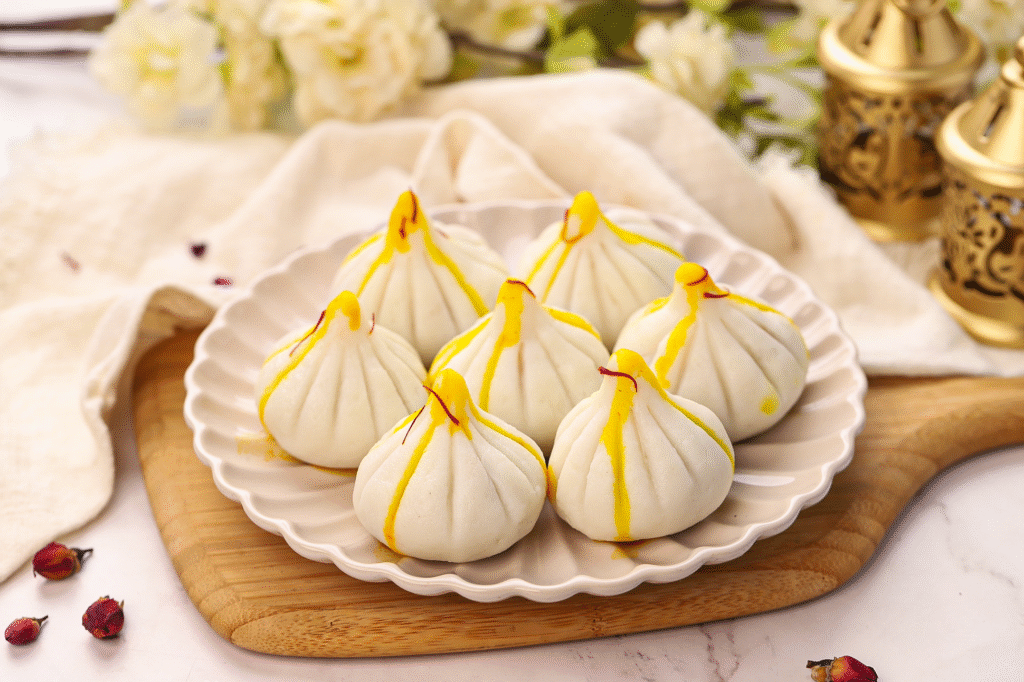
The Ultimate Festival Comfort Food
There is something deeply comforting about standing in a busy kitchen on Ganesh Chaturthi, watching your family press sweet filling into soft dough to shape Modak. Traditionally steamed in banana leaves, these delicate dumplings enclose a warm, molten center of freshly grated coconut and dark jaggery, spiked with cardamom and nutmeg.
- Why we love it: It hits that perfect sweet spot—a soft, chewy outer skin wrapping around a rich, sticky filling that melts instantly.
- The real magic: While the classic steamed version (Ukadiche Modak) served with a heavy drizzle of warm desi ghee remains unbeatable, fried versions give you a satisfying crunch, and modern variations even blend in rich khoya or dark chocolate.
Puran Poli / Bobbatlu
The Golden Flatbread of Spring
If you grew up in Maharashtra, Andhra Pradesh, or Karnataka, the smell of Puran Poli toasting on a hot iron griddle is the true harbinger of spring festivals like Gudi Padwa and Ugadi. This sweet stuffed flatbread is packed with puran—a silky paste of chana dal cooked down with jaggery, accented by cardamom, nutmeg, and dry ginger.
Rolling out the stuffed dough takes a gentle, experienced hand so the sweet filling stretches right to the very edges without bursting. Served piping hot off the tawa with a generous dollop of melted ghee or a side bowl of warm milk, it balances earthy spices with a soft, comforting sweetness.
Gujiya
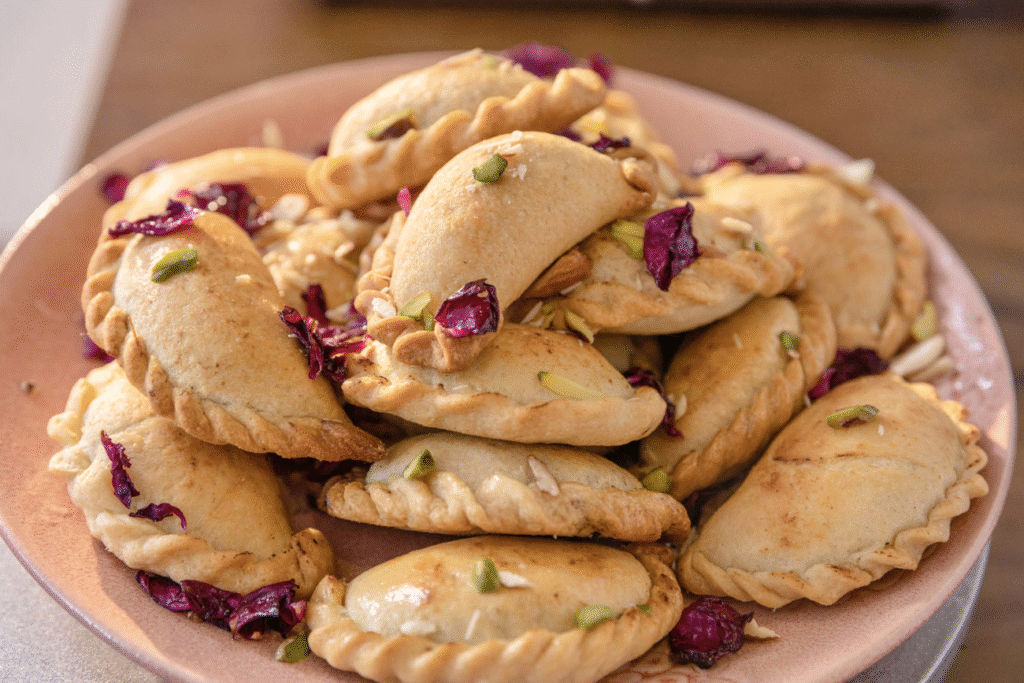
The Holi Favorite That Gets Everywhere
You simply cannot celebrate Holi without ending up with powdered sugar on your fingers and crisp pastry crumbs on your shirt from a fresh Gujiya. Shaped like a crescent moon, this festive dumpling features a flaky, buttery crust made of refined flour kneaded with pure ghee.
Inside lies a rich filling of roasted khoya, chopped almonds, pistachios, raisins, and aromatic cardamom powder. Once deep-fried to a golden crisp, some regions dip them in heavy sugar syrup (creating variants like Chandrakala), while others leave them dry for a satisfying contrast between the flaky shell and soft interior.
Kheer / Payasam
A Bowl of Pure Nostalgia
Kheer—known as Payasam across South India—is the ultimate culinary warm hug of Indian home cooking. It is the dish mothers make to celebrate good news, birthdays, and sacred festivals like Onam and Sharad Purnima. Made by slowly simmering full-cream milk with basmati rice over a gentle flame, it relies on patience rather than complex techniques to achieve its thick, velvety texture.
- The Flavor Profile: Creamy, rich, and floral with subtle notes of cardamom, saffron, and rose water.
- Fun Regional Takes: Rice Kheer, Vermicelli (Sevaiyan) Payasam, Sabudana Kheer, and Chana Dal Payasam.
- Pro-Tip: It’s just as divine served warm on a cold evening as it is thoroughly chilled straight out of the fridge on a hot summer afternoon.
Motichoor Ladoo
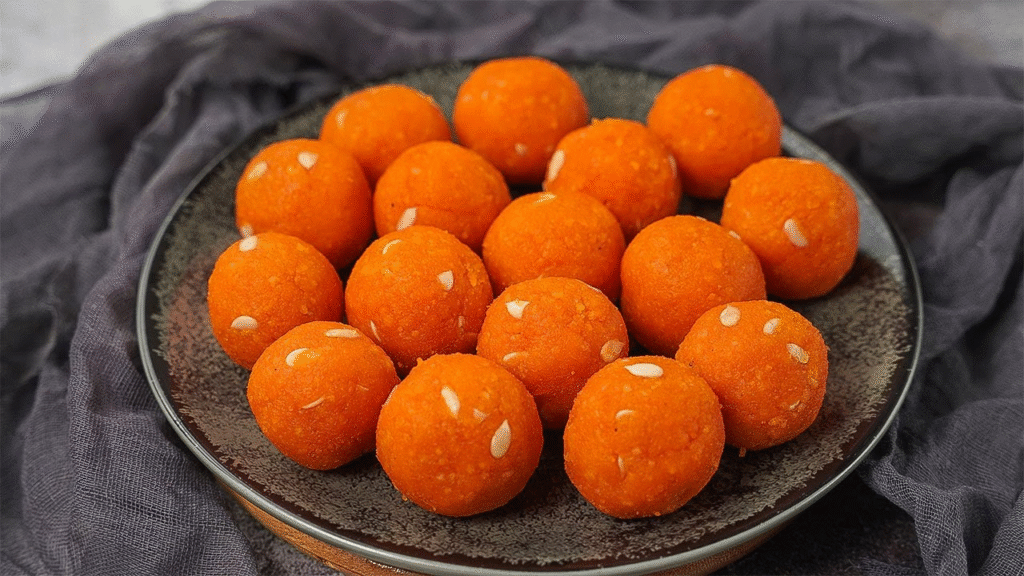
The King of Celebrations
No Indian wedding invitation, housewarming, or major puja feels complete without a bright orange Motichoor Ladoo being passed around. The name literally translates to “crushed pearls,” which perfectly describes how these sweets are built: tiny droplets of chickpea flour batter are fried into microscopic boondi pearls, then soaked in a warm saffron and cardamom sugar syrup.
Once the pearls absorb the sweet liquid, they are tossed with crunchy melon seeds (magaz) and rolled into soft spheres. Unlike denser flour-based ladoos, a good Motichoor Ladoo practically dissolves on your tongue with minimal effort, leaving behind a trail of sweet syrup and nutty goodness.
Gulab Jamun
The Universal Crowd-Pleaser
It is almost impossible to find anyone who can turn down a warm bowl of Gulab Jamun. These iconic golden-brown spheres are crafted from fresh khoya (solidified milk solids) and a touch of flour, worked gently into a silky dough that must be rolled completely smooth to prevent cracking in the pan.
They are deep-fried slowly over low heat in pure ghee until they turn a deep mahogany. Straight from the fryer, they plunge into a warm, sticky sugar syrup perfumed with rose water, cardamom, and saffron. As they soak, they swell into tender, syrup-dripping treats that melt the second you take a bite.
Quick Guide: Iconic Regional Delights
| Sweet Name | Origin / Region | What Makes It Special? | Primary Festival / Occasion |
| Kaju Katli | North & Central India | Smooth, diamond-cut cashew fudge topped with silver leaf (vark) | Diwali, Raksha Bandhan, Corporate Gifting |
| Rasgulla | West Bengal & Odisha | Spongy, snow-white chenna balls soaked in light sugar syrup | Durga Puja, Family Feasts, Weddings |
| Mysore Pak | Karnataka (Mysore) | Rich block of besan and caramelized ghee that melts instantly | South Indian Weddings, Diwali |
| Rasmalai | Bengal & North India | Poached cottage cheese discs swimming in saffron rabri | Holi, Diwali, Grand Festive Dinners |
| Soan Papdi | Pan-India | Flaky, cotton-candy sweet made of fine flour threads | Diwali Gifting, Festival Exchanges |
Kaju Katli
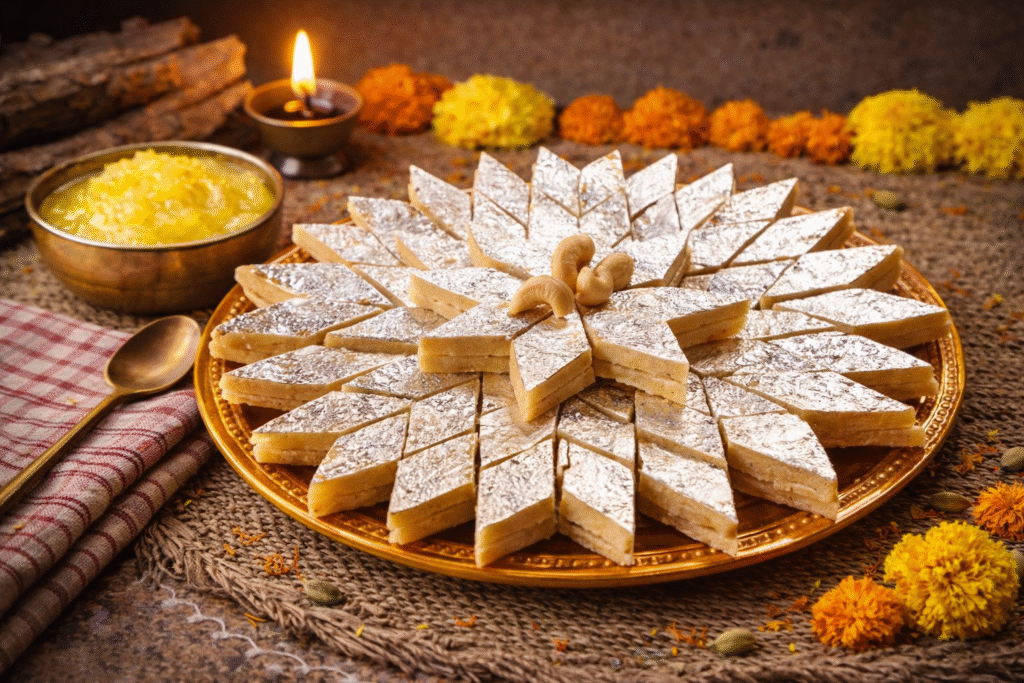
The First Sweet to Disappear From the Box
Kaju Katli is the undisputed royalty of festive gift boxes. Recognizing its clean diamond shapes shimmering with delicate edible silver leaf (vark), anyone who opens a box of sweets immediately reaches for these smooth cashew slices first.
Making it requires absolute precision. Fresh cashew nuts are ground into a fine powder, then cooked with hot sugar syrup until it forms a pliable dough. Kneaded while warm to create a silky smooth texture, it is rolled flat and sliced into neat diamonds. Rich, lightly sweet, and delightfully nutty, it offers a refined taste that never feels overly heavy.
Rasgulla
Snow-White Spongy Heaven
Originating in Eastern India—where Bengal and Odisha share a deep cultural love for it—Rasgulla is proof that simple ingredients often make the most extraordinary treats. Made entirely from fresh chenna (soft cottage cheese), the dough is kneaded relentlessly by hand until the milk fats release and the texture becomes completely smooth.
Rolled into seamless balls, they are simmered in a light, bubbling sugar syrup until they double in size and transform into spongy clouds. When you bite into a chilled Rasgulla, it releases a sweet burst of syrup that makes it one of the most refreshing desserts in Indian cuisine.
Mysurpa / Mysore Pak
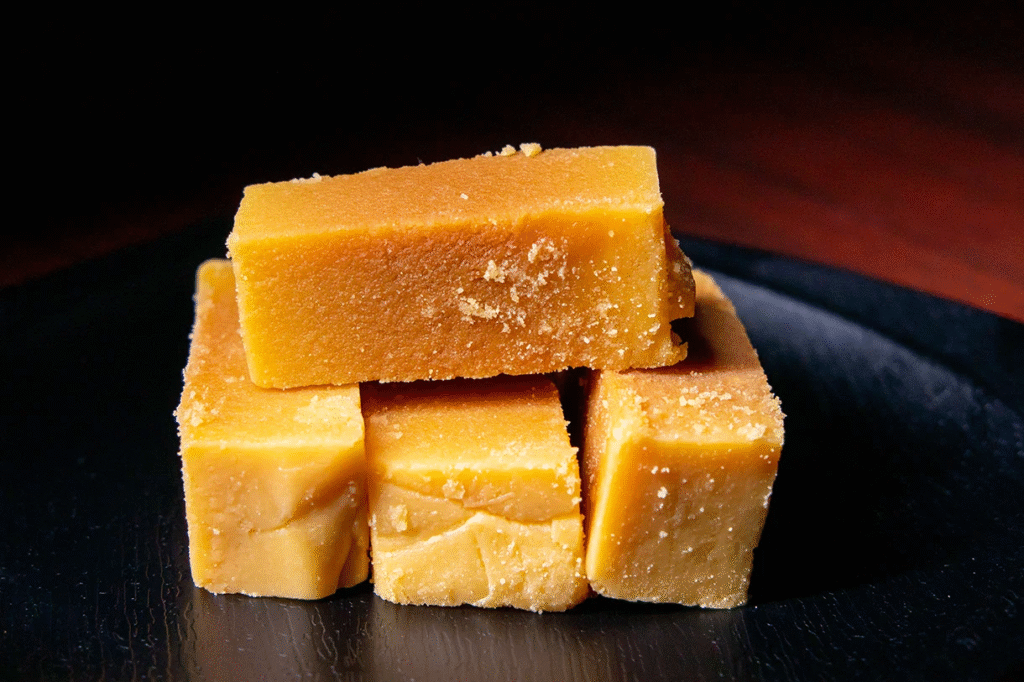
A Royal Ghee Explosion
Born in the royal kitchens of the Mysore Palace, Mysore Pak is an unapologetic celebration of pure ghee, chickpea flour (besan), and sugar. Traditionalists favor the classic version, which is firm, golden, and filled with tiny porous air pockets that trap melted butter.
Modern sweet shops often craft a softer, denser version—frequently called Soft Mysurpa—that glides over the palate like rich fudge. As the roasted besan cooks in hot sugar, ladles of melted ghee are constantly poured into the pan until the mixture turns fragrant and caramelized, creating an irresistible treat for serious sweet lovers.
Rasmalai
Pure Royalty in a Bowl
If Rasgulla is a comforting classic, Rasmalai is its luxurious, festive cousin. Soft, flattened discs of poached chenna are gently squeezed of their clear syrup and submerged into a thickened, chilled milk base known as rabri.
This milk sauce is simmered down slowly and infused with saffron threads, cardamom, and rose water, tinting it a delicate pale gold. Garnished with a generous shower of slivered pistachios and almonds, Rasmalai is served cold in small bowls, offering a silky, cooling end to a heavy festive feast.
Besan Ladoo
The Nostalgic Homemade Classic
The rich smell of Besan Ladoo roasting on the stove is the universal soundtrack to festive prep in Indian households. It requires patience above all else: coarsely ground chickpea flour must be roasted in pure ghee over a slow, steady flame for what feels like an eternity, until the raw smell vanishes and the kitchen fills with a warm, nutty aroma.
- Texture Secret: Using coarse flour (laddu besan) gives it a pleasant, grainy bite instead of turning pasty.
- Flavor Boosters: Crushed green cardamom, nutmeg, and toasted cashew bits.
- Shelf Life: Stays fresh for weeks at room temperature, making it ideal for care packages sent to loved ones far away.
Jalebi
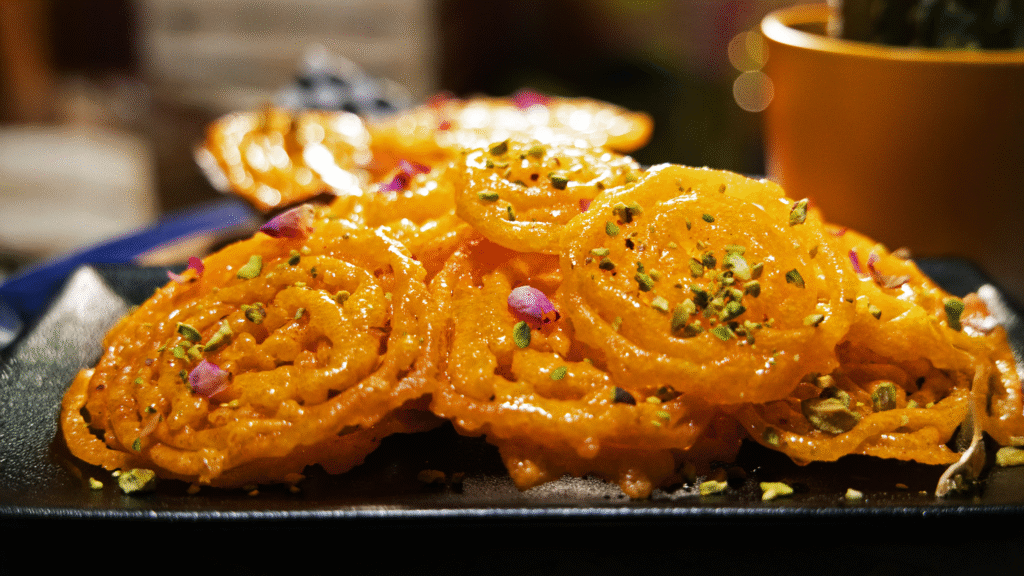
Crispy, Crunchy, Syrupy Goodness
Early mornings in many Indian towns begin with the sight of a street vendor expertly piping swirls of batter directly into giant pans of hot oil. Jalebi is all about bright color, crisp texture, and instant gratification.
Made from a fermented maida and yogurt batter that gives it a subtle, pleasant tang, these crispy spirals are fried until golden before being dunked into hot syrup flavored with saffron and cardamom. Whether enjoyed piping hot alongside savory fafda on a Sunday morning or paired with cold rabri at night, that first crunchy, syrupy bite is pure happiness.
Soan Papdi
The Magic Cotton-Candy Sweet
Soan Papdi is famous for its magical texture that crumbles into fine, melt-in-your-mouth threads the moment it hits your tongue. Often passed from house to house in bright gift boxes during Diwali, its preparation is an incredible display of traditional confectionary artistry.
A cooked syrup of sugar and liquid glucose is combined with a roasted roux of besan, maida, and ghee. Confectioners then pull, fold, and stretch the warm sugar dough hundreds of times over metal hooks until millions of whisper-thin threads form. Pressed gently into light cubes, it is finished with chopped pistachios.
Sandesh
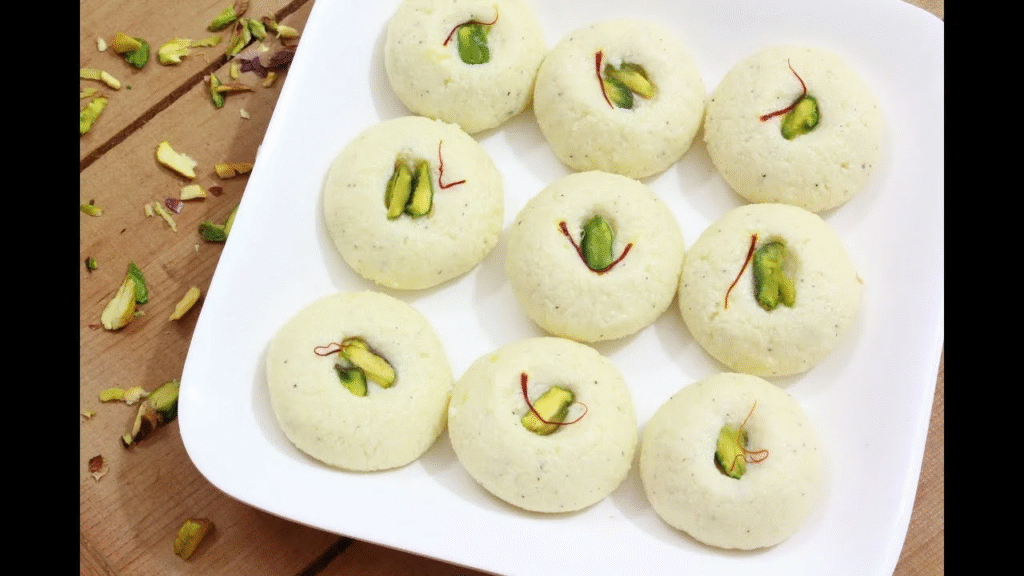
Subtle Elegance from Bengal
Sandesh represents the quiet elegance of Bengali confectionery. Made without heavy frying or excessive sugar, it relies on the natural, clean taste of fresh milk to shine during Durga Puja and family gatherings.
Freshly drained chenna is lightly kneaded with fine sugar or dark date palm jaggery (Nolen Gur) over extremely low heat just long enough to bind the ingredients without drying them out. The delicate dough is pressed into traditional wooden or terracotta molds shaped like leaves, flowers, or seashells, offering a sweet that feels wonderfully light.
Kalakand
Rich, Grainy, and Milky
Originating from Rajasthan, Kalakand is a rich, moist milk cake celebrated for its uniquely grainy texture and milky taste. Traditional cooks spend hours boiling down full-cream milk with sugar, adding a tiny drop of citric acid at just the right moment to curdle the dairy into delicate, soft curds.
As the liquid evaporates, the sweet thickens into a dense, fudge-like paste. Poured into greased trays and topped with sliced pistachios and almonds, it cools into soft white squares that break apart effortlessly, delivering a rich milk flavor in every single bite.
Comparing India’s Favorite Street & Festival Treats
| Sweet Name | Preparation Style | Texture Experience | How It’s Served Best |
| Malpua | Shallow-fried sweet pancake soaked in syrup | Crisp lacy edges with a soft, rich center | Warm, topped with cold Rabri |
| Milk Peda | Caramelized milk solids cooked down with sugar | Fudgy, dense, and comforting | Room temperature with tea |
| Ghevar | Deep-fried honeycomb flour disc | Super porous, lacy, and crispy | Soaked in syrup & topped with Rabri |
| Imarti | Deep-fried whipped urad dal batter spirals | Chewy, juicy, and floral | Piping hot straight from the syrup |
| Agra Petha | Candied ash gourd simmered in sugar syrup | Translucent, crisp, and juicy | Chilled or room temperature |
Malpua
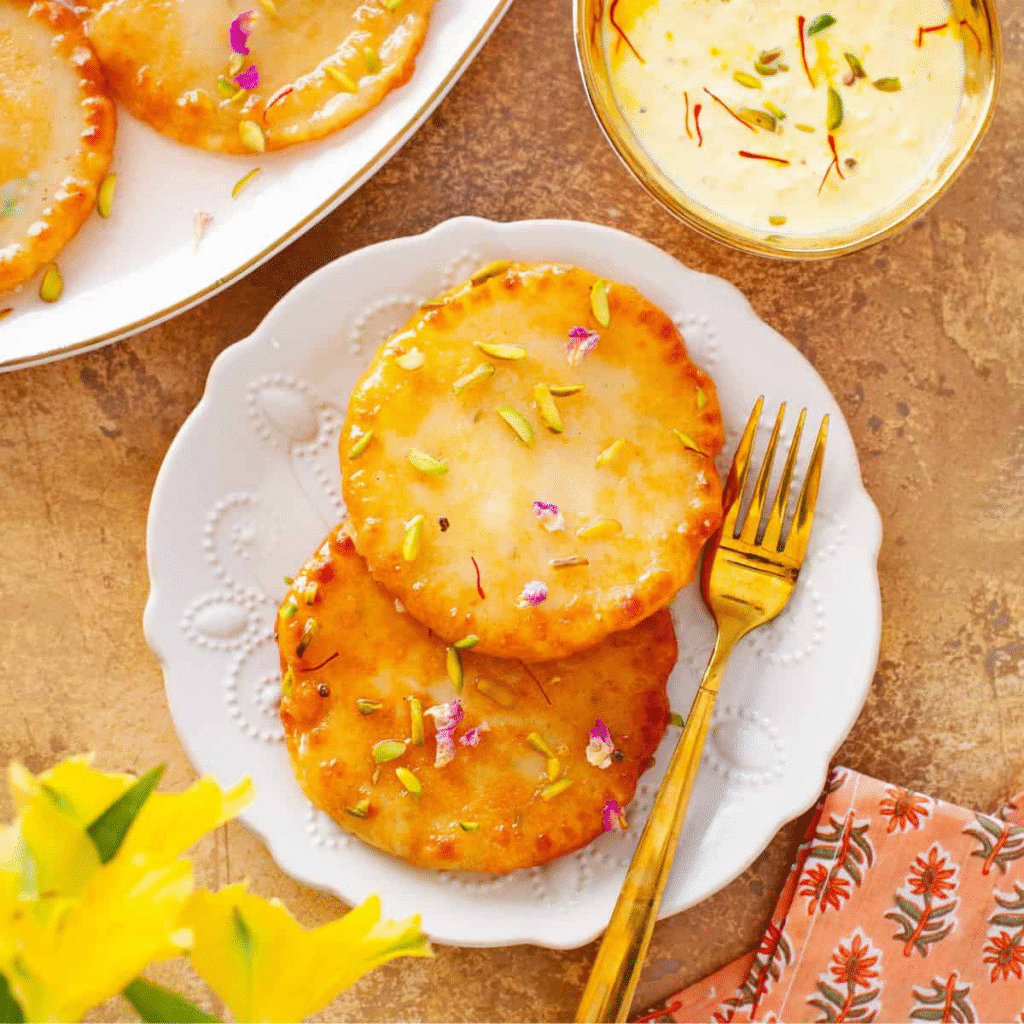
The Festive Pancake Choice
Malpua is a rustic, sweet pancake fried to perfection during festivals like Holi, Eid, and Diwali. The batter—a rich mixture of flour, milk, semolina, khoya, and crushed fennel seeds—is left to rest so the warm spices can fully infuse the liquid.
Ladlefuls are fried in hot ghee until the edges become lacy and golden brown while the center remains soft and tender. Lifted straight from the skillet into a bath of warm cardamom sugar syrup, Malpuas are often served hot with a dollop of cold, thickened rabri layered over top.
Milk Peda
The Temple Town Favorite
If you have ever visited a temple town in Northern India, chances are you’ve tasted an authentic Mathura Peda. These round, semi-soft milk solids are handed out as sacred offerings (prasadam) and shared widely during Janmashtami.
They are made by slowly caramelizing khoya and sugar in heavy iron pans until the mixture turns a warm, dusty brown and takes on a deep, malty flavor. Seasoned with green cardamom, the fudge is shaped by hand into small discs—often stamped with a thumbprint in the center—delivering a nostalgic flavor that tastes like home.
Ghevar
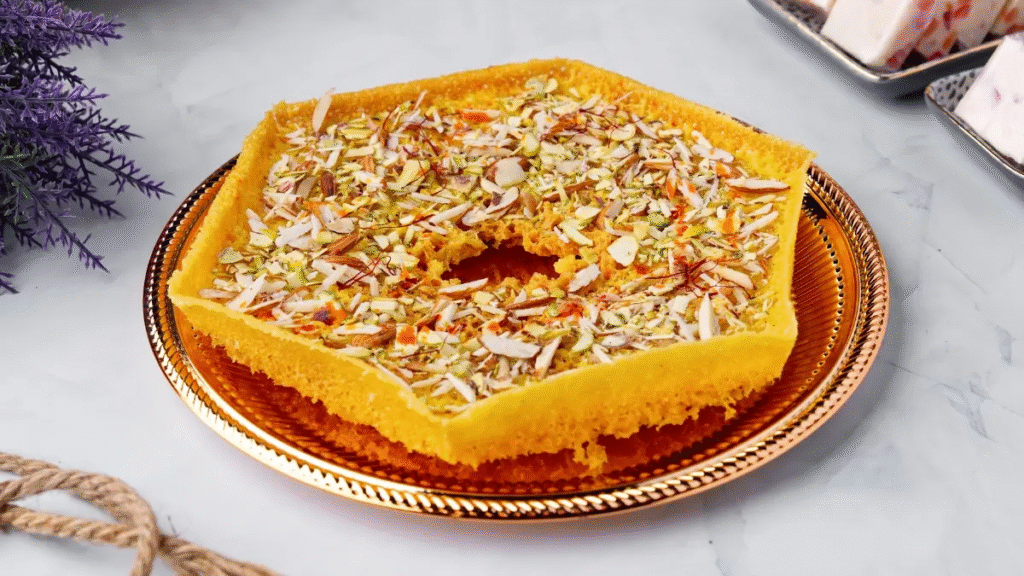
The Monsoon Miracle
Ghevar is a stunning, disc-shaped sweet that marks the arrival of the monsoon season and festivals like Teej and Raksha Bandhan in Rajasthan. Looking at its intricate, lacy design, it’s hard to believe it is made from simple flour, milk, and ghee.
The magic happens when thin, cold batter is poured drop by drop from a height into a deep pot of smoking-hot ghee. The water instantly vaporizes, creating a porous, honeycomb-like disc. Once fried to a light crisp, it is soaked in aromatic sugar syrup and often topped with creamy rabri and slivered nuts.
Imarti
Jalebi’s Gorgeous Cousin
While often confused with Jalebi due to its bright orange color and spiral shape, Imarti (known as Jangiri in the South) has a texture and flavor profile all its own. Instead of wheat flour, its batter is made from soaked black gram lentils (urad dal) whipped until light and airy.
Using a cloth piping bag, the cook forms intricate geometric flower patterns directly in warm ghee. Deep-fried until crisp on the outside yet chewy within, the shapes soak in a warm saffron syrup, yielding a sweet that is floral, juicy, and visually stunning.
Agra Petha
The Refreshing Gourd Candy
Straight from the historic city of Agra, Agra Petha is a translucent candy crafted from ash gourd (white pumpkin). Unlike milk-heavy desserts, this unique sweet has a clean, crisp bite that makes it a beloved gift for travelers visiting the Taj Mahal.
- Production Secret: Diced ash gourd is soaked in limewater to firm up the cell walls before boiling, giving it that distinct pop.
- Popular Flavors: Classic Angoori Petha, Kesar (Saffron) Petha, and rich Pan-stuffed Petha.
- Why It Stands Out: It is completely fat-free and offers a light, refreshing finish after a heavy holiday feast.