
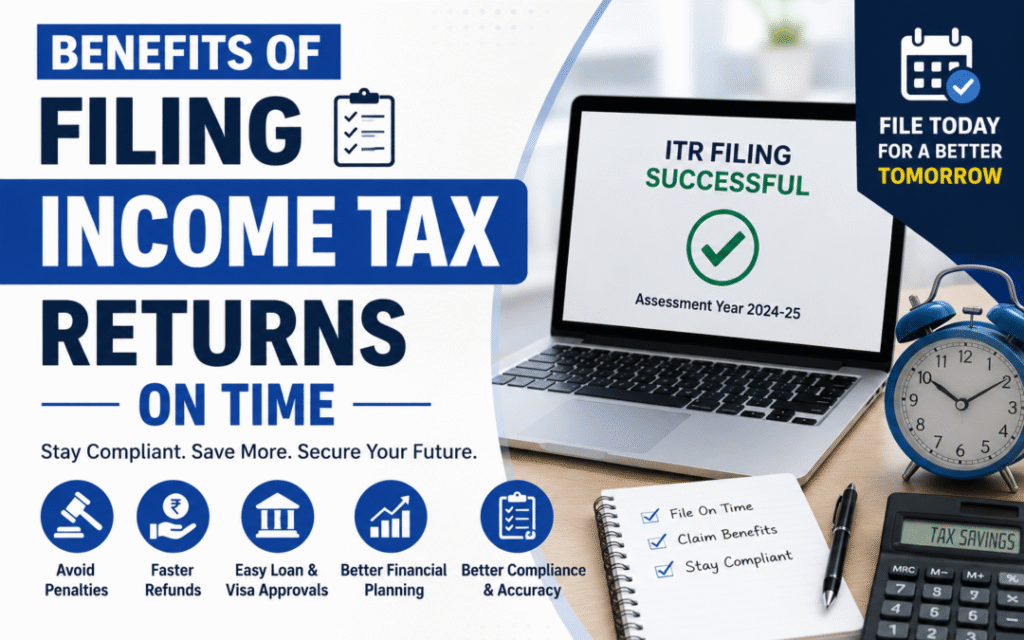
Tax planning is the strategic process of organizing your financial activities to minimize your overall tax liability while strictly adhering to statutory laws. It involves making deliberate, informed decisions about your gross income, investment portfolio, retirement savings, and deductible expenses. Effective tax management ensures that you fully leverage available tax credits, allowances, and statutory deductions without violating regulatory standards. Rather than reacting at year-end, a proactive approach integrates financial planning into your daily routine to optimize after-tax income and accelerate long-term wealth accumulation.
Why Is Tax Planning Important?

Implementing a structured tax strategy yields significant financial benefits that extend far beyond simple compliance.
- Reduces overall tax liability: Maximizes legal deductions to lower your final tax obligation.
- Increases annual savings: Retains a larger portion of your earned income for personal investments.
- Improves cash flow: Prevents over-withholding, ensuring steady access to working capital.
- Accelerates financial goals: Channels tax savings directly into high-yielding investment accounts.
- Eliminates costly penalties: Avoids late-filing fees and interest charges through timely compliance.
- Enhances investment decisions: Evaluates opportunities based on real after-tax returns.
- Guarantees regulatory compliance: Keeps your financial records fully aligned with current tax codes.
By planning ahead, you eliminate last-minute stress during tax season and establish a clear roadmap for long-term wealth management.
Key Elements of Tax Planning
1. Understanding Your Tax Bracket

Your marginal tax rate determines the percentage of tax owed on each additional dollar of taxable income. Identifying your specific tax bracket allows you to estimate your baseline tax burden and recognize when moving into a higher tier might trigger steeper rates. Understanding these thresholds helps you time bonus payouts, schedule asset sales, or increase pre-tax contributions to keep your income within optimal bands.
2. Tracking Income and Expenses
Maintaining meticulous financial records throughout the fiscal year streamlines tax preparation and ensures no legitimate write-offs are overlooked. Essential documentation includes:
- Salary slips and end-of-year tax statements
- Business income logs and invoices
- Investment earnings statements (dividends, interest, capital gains)
- Utility bills for home office deductions
- Business travel and equipment purchase receipts
- Medical expenses receipts exceeding standard thresholds
- Tuition fees and student loan interest documentation
- Charitable donation receipts from accredited organizations
3. Claiming Eligible Tax Deductions

Tax deductions directly reduce your adjusted gross income, lowering the base upon which your taxes are calculated. Common eligible deductions typically include:
- Pre-tax retirement contributions to qualified pension plans
- Charitable contributions made to verified non-profit organizations
- Ordinary and necessary business expenses incurred to generate income
- Education-related costs, including eligible tuition and interest
- Mortgage interest payments on primary residences
- Out-of-pocket medical expenditures meeting specific statutory criteria
4. Tax-Efficient Investments
Where you hold your assets is just as important as the assets themselves. Utilizing tax-advantaged accounts shields your compound growth from annual taxation, maximizing your net returns over time. Key vehicles include:
- Employer-sponsored retirement plans offering tax-deferred growth
- Government-backed savings schemes with tax-free interest accrual
- Individual retirement accounts providing pre-tax or post-tax benefits
- Tax-managed index funds designed to minimize annual dividend distributions
Tax Planning Strategies for 2026
Maximise Retirement Contributions

Maximizing your contributions to qualified retirement plans remains one of the fastest ways to lower your current taxable income. Every dollar contributed pre-tax reduces your top-line earnings for the year while securing your financial independence. For 2026, ensure you review updated contribution limits early in the year and set up automatic monthly transfers to fully fund your accounts before the annual deadline.
Review Your Investment Portfolio
Regularly auditing your investment portfolio helps manage the impact of dividend distributions, interest income, and realized gains. Aligning your holdings with tax-efficient asset placement strategies—such as placing high-yield bonds in tax-sheltered accounts and growth equities in taxable accounts—helps preserve your total returns. Holding assets longer than twelve months generally qualifies them for favorable long-term capital gains rates.
Take Advantage of Tax Credits
Unlike deductions that lower taxable income, tax credits provide a dollar-for-dollar reduction of your actual tax liability. Research government incentives designed to encourage specific behaviors, such as renewable energy installations, energy-efficient home upgrades, higher education expenses, and childcare costs. Claiming these credits directly reduces the total check you write to tax authorities.
Plan Charitable Giving

Strategic philanthropic giving amplifies your social impact while offering substantial tax relief. Donating appreciated assets, such as long-held stocks or mutual funds, allows you to deduct the full fair market value while completely avoiding capital gains tax on the appreciation. Alternatively, setting up a donor-advised fund enables you to claim an immediate tax deduction while distributing grants to charities over time.
Manage Capital Gains
If you hold appreciating assets like real estate, equities, or digital assets, timing your sales is vital to controlling your capital gains tax. Offsetting realized gains against realized losses—a process known as tax-loss harvesting—can neutralize your tax exposure on profitable investments. Be mindful of wash-sale rules to ensure your harvested losses remain legally deductible.
Separate Personal and Business Expenses
For freelancers, independent contractors, and small business owners, co-mingling funds is a major trigger for audits and missed deductions. Maintaining dedicated business bank accounts and business credit cards creates a clean audit trail. This separation simplifies bookkeeping, ensures all valid operational overhead is claimed, and protects your personal assets from business liabilities.
Common Tax Planning Mistakes to Avoid

Avoiding critical errors is just as important as implementing good strategies. Common pitfalls include:
- Procrastinating until the filing deadline: Leads to rushed mistakes, overlooked deductions, and high filing stress.
- Inadequate record keeping: Results in lost receipts, disclaimed deductions, and failed audits.
- Overlooking minor deductions: Ignores small daily expenses that aggregate into significant annual savings.
- Failing to monitor tax law changes: Misses out on new credits or continues using phased-out deductions.
- Blending personal and commercial funds: Triggers IRS scrutiny and complicates legitimate business write-offs.
- Filing incomplete or inaccurate returns: Causes processing delays, mandatory amended filings, and potential fines.
- Neglecting capital gains liabilities: Forgets to factor in short-term trading taxes when rebalancing portfolios.
Best Tools for Tax Planning
Leveraging modern financial software simplifies data collection, reduces manual entry errors, and provides real-time visibility into your projected tax obligations.
| Tool Category | Key Functionality | Primary Benefit |
| Budgeting Apps | Tracks cash flow and categorized income streams | Highlights potential tax-deductible category spends |
| Expense Trackers | Captures and logs business receipts digitally in real-time | Prevents lost documentation for business write-offs |
| Accounting Platforms | Automates double-entry bookkeeping and financial reporting | Generates clean Profit & Loss statements for tax preparation |
| Tax Prep Software | Guides users through step-by-step return filing | Calculates optimal deduction strategies automatically |
| Receipt Scanners | Extracts transaction data via optical character recognition | Creates permanent digital records compliant with tax rules |
| Investment Trackers | Calculates cost basis and monitors unrealized capital gains | Identifies opportunities for strategic tax-loss harvesting |
Tips for Better Tax Planning
Adopt these disciplined practices throughout the year to maintain complete control over your finances:
- Establish a continuous planning schedule: Treat tax management as a monthly routine rather than an annual event.
- Digitize all supporting documentation: Store clear scans of invoices, receipts, and statements in secure cloud folders.
- Log deductible mileage instantly: Use automated GPS tracking apps to capture every business trip.
- Conduct quarterly financial reviews: Estimate your quarterly tax payments to avoid underpayment penalties.
- Monitor local and federal policy updates: Stay informed on legislative changes regarding rates, brackets, and credits.
- File returns well before deadlines: Submit filings early to protect against identity theft and expedite refunds.
- Engage accredited professionals: Partner with a certified public accountant (CPA) or certified tax planner for tailored advice.
Who Should Use Tax Planning?
Tax optimization is a universal financial discipline that benefits individuals across all income spectrums and employment models:
- W-2 Employees: Optimize withholding allowances, flexible spending accounts, and retirement matching.
- Freelancers & Gig Workers: Track self-employment taxes, home office write-offs, and estimated quarterly payments.
- Small Business Owners: Navigate corporate structures, payroll taxes, asset depreciation, and operational deductions.
- Investors: Manage dividend taxes, long-term capital gains, and tax-efficient portfolio rebalancing.
- Real Estate Owners: Leverage depreciation schedules, 1031 exchanges, and property maintenance deductions.
- Retirees: Balance pension distributions, Social Security taxation, and required minimum distributions (RMDs).
Benefits of Professional Tax Advice
While self-service software handles basic tax returns well, complex financial situations demand the expertise of a credentialed tax professional. You should consider hiring a specialist if you:
- Operates multiple business entities or complex partnership structures
- Earn foreign income or navigate multi-jurisdictional tax obligations
- Oversee extensive investment portfolios with high trading volume
- Buy, sell, or manage multiple commercial or residential properties
- Undergo significant life transitions like marriages, divorces, or receiving large inheritances
A qualified tax advisor does more than fill out forms—they build customized strategies that safeguard your wealth, ensure total legal compliance, and deliver long-term peace of mind.